Vintage Synths
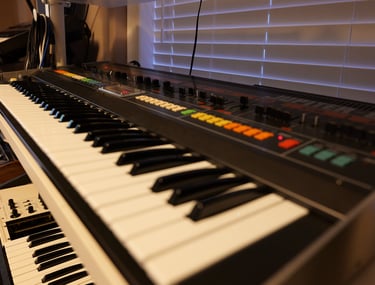
Roland Jupiter-8
A legendary analog polysynth from the early 1980s, the Jupiter-8 is prized for its rich, warm tone and powerful dual-oscillator design. Used by artists from Duran Duran to Prince, it delivers lush pads, bright leads, and iconic vintage textures that define the sound of classic synth pop and modern electronic music alike.
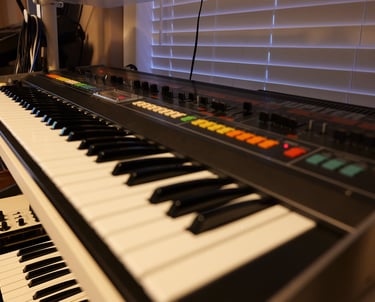
Yamaha DX5
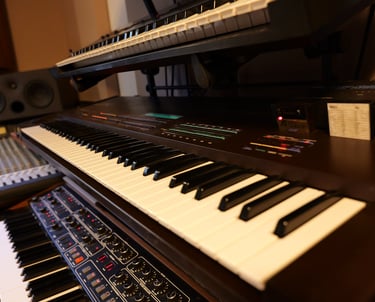
The Yamaha DX5 is a powerhouse of 1980s digital synthesis, featuring dual FM engines identical to two DX7s in one keyboard. Known for its crystal-clear electric pianos, metallic basses, and evolving pads, it brings expressive depth and precision that shaped countless pop, R&B, and film soundtracks of the era.
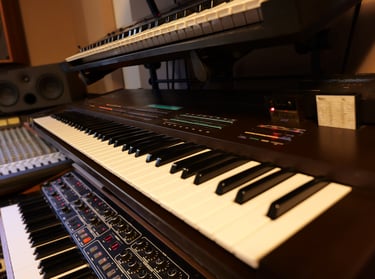
Rhodes Mk I 88
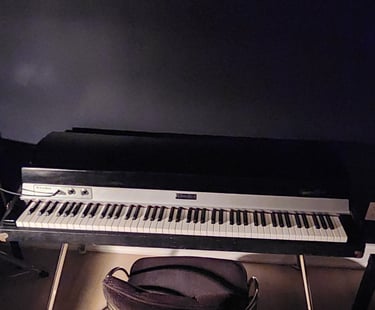
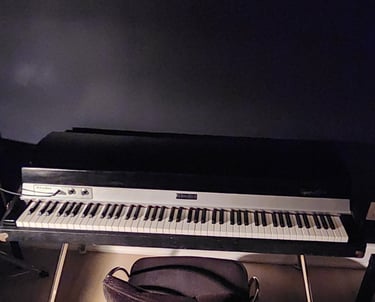
The Rhodes Mk I 88 is an iconic electric piano known for its soulful warmth and smooth, bell-like tone. With 88 weighted keys and rich analog character, it defined the sound of jazz, funk, and R&B throughout the ’70s and ’80s. From mellow chords to dynamic solos, the Rhodes Mk I adds timeless depth and groove to any recording.
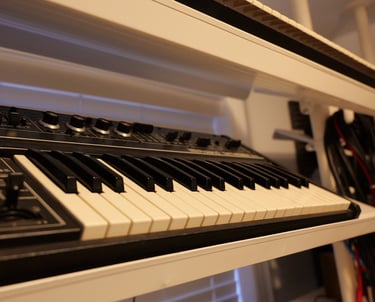
Roland SH-2
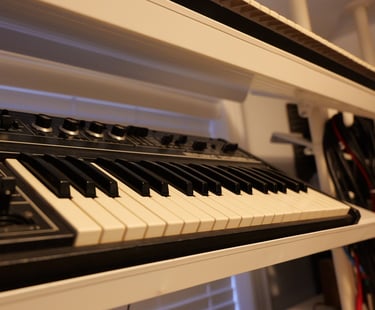
The Roland SH-2 is a classic monophonic synthesizer celebrated for its fat basses and sharp, punchy leads. Released in the late ’70s, it features two oscillators and a sub-oscillator that deliver thick, warm analog tones. Its simple layout and powerful sound make it a favorite for both vintage enthusiasts and modern producers seeking authentic analog character.
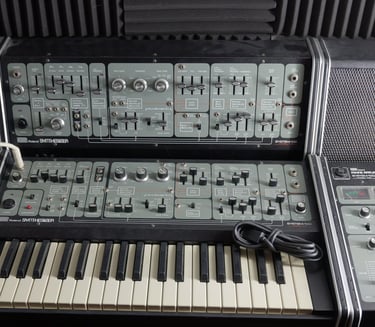
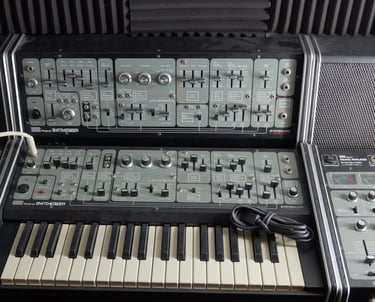
Roland System-100 (Full System)
The Roland System-100 is a semi-modular analog synthesizer system from the mid-1970s, revered for its warm, punchy tone and flexible patching options. The full system — combining the Model 101 Synthesizer, Model 102 Expander, Model 103 Mixer, Model 104 Sequencer, and Model 109 Speakers — delivers deep analog character with hands-on control and vintage modular versatility. From deep basslines to evolving experimental textures, the System-100 remains a cornerstone of classic Roland sound design and studio creativity.
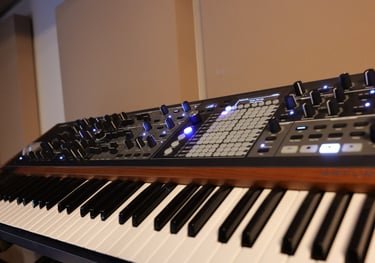
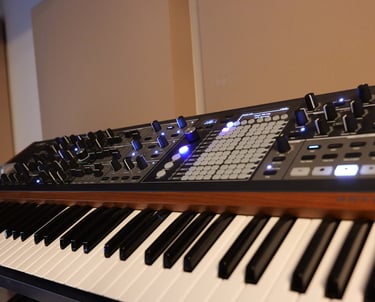
Arturia PolyBrute
The Arturia PolyBrute is a modern analog powerhouse that blends six-voice polyphony with deep modulation and expressive control. Featuring the unique Morphée touchpad, it allows seamless morphing between two sound states for evolving, organic tones. With lush pads, cinematic textures, and powerful basses, the PolyBrute bridges vintage warmth with cutting-edge flexibility — a true centerpiece for modern synth performance and sound design.
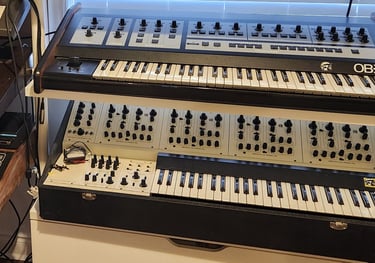
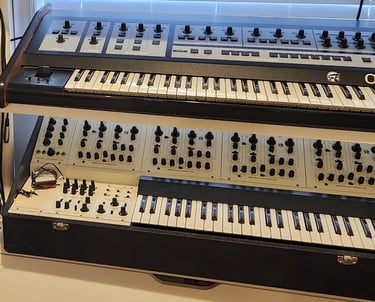
Oberheim TVS-1 (4-Voice SEM System)
A rare early polyphonic synthesizer from the mid-1970s built around four independent SEM (Synthesizer Expander Module) units. Each voice has its own VCOs, filter, and envelopes, giving the TVS-1 its rich, organic sound and natural detuning. It features a 49-key keyboard, analog sequencer, and external CV/Gate control. Known for its warm pads, brassy leads, and evolving textures, it’s one of the instruments that defined the classic Oberheim sound.
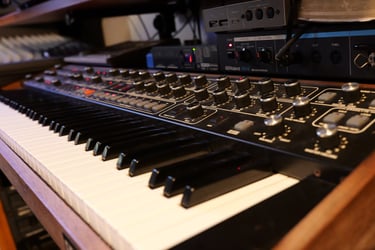
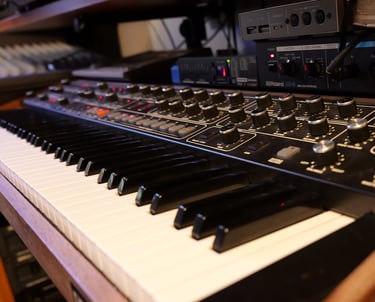
Sequential Circuits Prophet T8 (1983)
A flagship 8-voice analog polysynth known for its expressive wooden, weighted 76-key keyboard with both velocity and polyphonic aftertouch — a rare feature even today. Each voice has two VCOs, a rich analog low-pass filter, and advanced modulation for deep, evolving tones. The T8 also introduced split and layer modes plus early MIDI integration, making it one of the most sophisticated performance synths of its era.
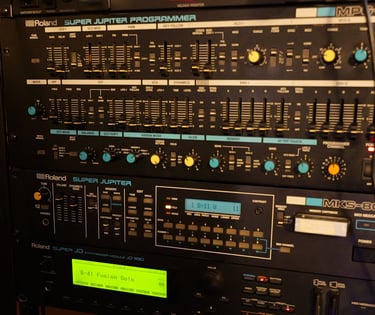
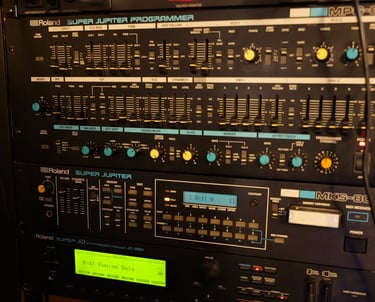
Roland MKS-80 Super Jupiter (1984) + MPG-80 Programmer
The MKS-80, known as the Super Jupiter, is Roland’s flagship rack-mount analog polysynth—essentially the studio version of the Jupiter-8 and Jupiter-6 combined. Paired with the MPG-80 programmer, it delivers full hands-on control of every parameter, making it one of the most powerful and flexible analog systems of the 1980s.
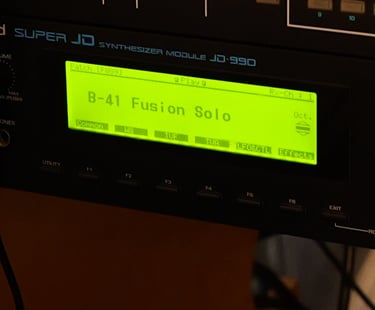
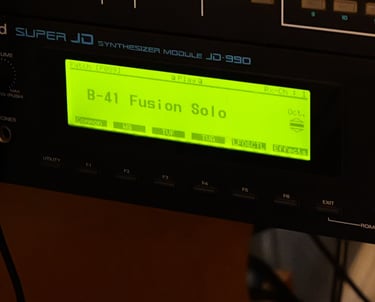
Roland JD-990 Super JD (1993)
The JD-990 is Roland’s flagship digital synthesizer module, expanding on the JD-800’s lush sound engine with deeper modulation, layering, and enhanced effects. Known for its warm digital textures, it blends PCM synthesis with analog-style controls, making it a studio favorite for ambient pads, cinematic scoring, and evolving tones.
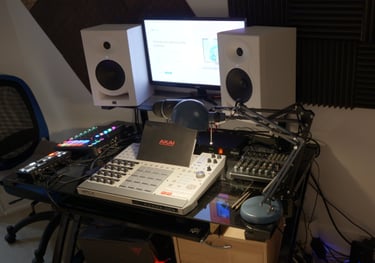
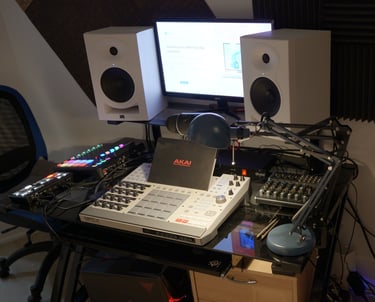
Akai MPCX SE (Special Edition)
The MPCX SE is Akai’s flagship standalone production workstation — a limited special edition featuring upgraded processing power, expanded storage, and the signature retro white-and-blue design. It combines classic MPC workflow with modern DAW-style editing, making it the ultimate tool for beatmakers, producers, and live performers.
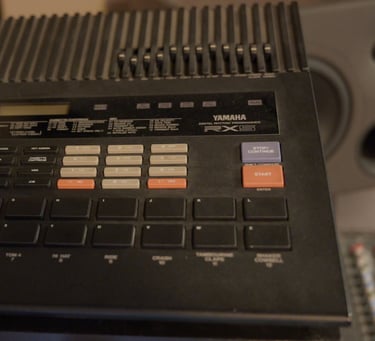
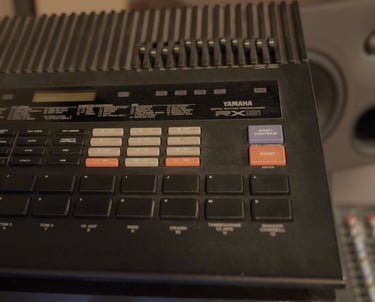
Yamaha RX5 Digital Rhythm Programmer (1986)
The RX5 is Yamaha’s flagship digital drum machine from the mid-1980s — a powerhouse of classic PCM samples with hands-on programmability and expressive performance options. Known for its tight timing, deep editing, and punchy sound, it became a studio staple for early electronic, pop, and industrial productions.
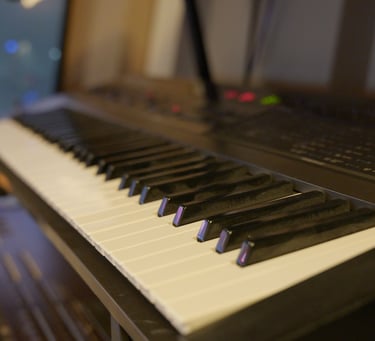
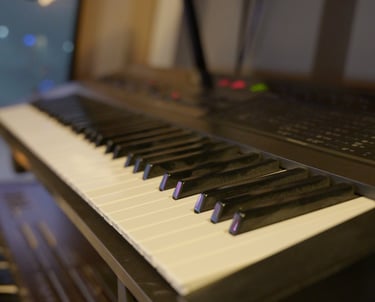
Korg DW-8000 Overview
The DW-8000 is an 8-voice hybrid synthesizer from 1985, combining digital waveforms with analog filters (Korg’s NJM2069 chip). It’s known for its warm, rich tone and for having a built-in digital delay that gives pads and leads great depth.
The MEX-8000 is a Korg-made memory expansion board that connects internally to the DW-8000’s CPU board.
It expands patch storage and adds extra MIDI capabilities for performance and editing.
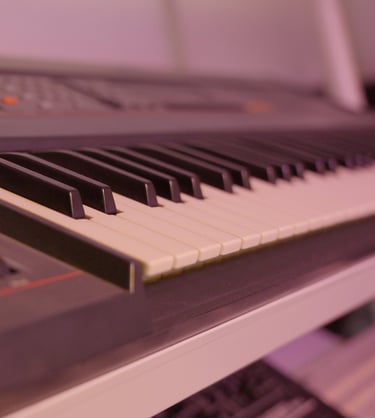
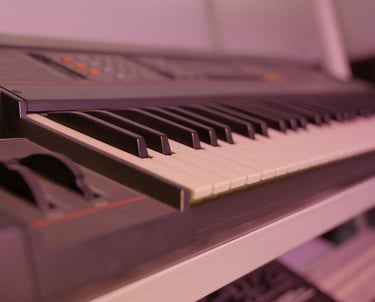
Ensoniq EPS (Ensoniq Performance Sampler)
Released in 1988, the EPS was Ensoniq’s first true sampling workstation.
It was designed to be fast, musical, and stage-friendly, combining real-time sampling, synthesis, sequencing, and performance control — years before the Akai MPCs or Roland workstations took off.

Korg T1 Overview
The Korg T1, released in 1989, was the flagship model of Korg’s T-series workstations (T1, T2, T3). It followed the legendary M1, expanding its sound library, storage, and sequencing power. The T1 used Korg’s AI Synthesis System, combining PCM-sampled waveforms with subtractive-style synthesis. It is best known for its 88 weighted keys, rich tone, and workstation capabilities.
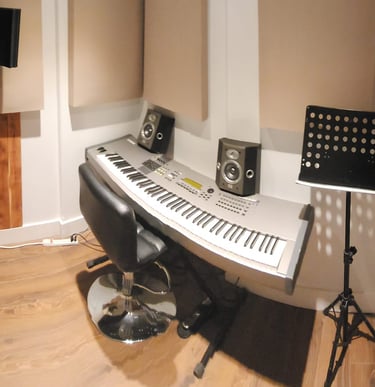
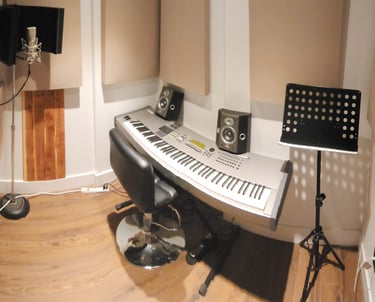
Yamaha Motif8
The MOTIF8 is an 88-key weighted workstation keyboard from Yamaha, featuring their AWM2 tone engine. It’s designed for serious performers and studio use — full-sized keyboard (88 notes) with balanced hammer action, real keys that feel like a piano. According to Yamaha’s spec sheet: 88 keys, polyphony of 62 voices, dimensions 1,458 (W) × 465 (D) × 166 (H) mm, weight ~ 28.0 kg.
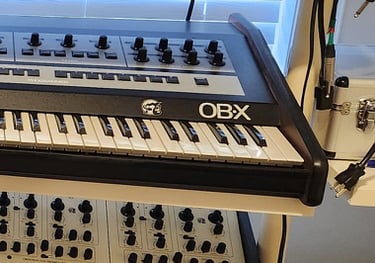
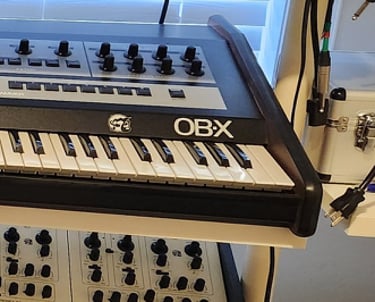
Oberheim OB-X Rev 1
The Oberheim OB-X Rev 1 is a rare early version of one of the most iconic analog polysynths ever made. Released in 1979, it features discrete analog circuitry that gives it a raw, powerful, and organic tone — slightly more aggressive than later revisions. With up to eight voices, each with its own VCOs and filters, the OB-X delivers massive brass sounds, warm pads, and punchy leads that defined artists like Prince, Rush, and Van Halen. Its unmistakable Oberheim character continues to inspire generations of synth enthusiasts and producers.
ARP 2600
A legendary semi-modular analog synthesizer introduced in 1971, the ARP 2600 combines the flexibility of a modular system with the playability of a keyboard synth. It features three VCOs, a multimode VCF, ring mod, spring reverb, and sample-and-hold, all patchable yet internally pre-wired for quick setup. Renowned for its fat basses, expressive leads, and sci-fi sound design, the 2600 became a studio staple for artists like Stevie Wonder, The Who, and Jean-Michel Jarre.
Sequential Circuits Prophet-5 Rev 1
Released in 1978, the Prophet-5 Rev 1 was the world’s first fully programmable polyphonic synthesizer. It features five voices, each with two VCOs, a Curtis low-pass filter, and an ADSR envelope, controlled by a Z-80 microprocessor for patch memory—a revolution at the time. The Rev 1 units were hand-built, rare, and known for their warm, raw analog tone and slightly unstable tuning, giving them a uniquely organic character. Used by artists like Peter Gabriel, Genesis, and Vangelis.
Roland Super JX (JX-10 / MKS-70)
Released in 1986, the Super JX combines dual JX-8P synth engines for a total of 12 analog voices. It features digitally controlled oscillators (DCOs), rich analog filters, and built-in chorus for lush pads and strings. Known for its smooth, warm tone and deep layering capabilities, it excels at cinematic textures and evolving soundscapes. The rack version is the MKS-70, often paired with the PG-800 programmer for hands-on control.
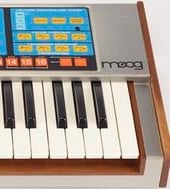
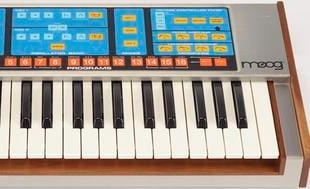
Moog Source
Classic monophonic analog synthesizer released in 1981. It features two voltage-controlled oscillators, a powerful 24 dB Moog ladder filter, and digital patch memory (unusual for its time). Known for its fat basses, sharp leads, and punchy sequences, the Source blends vintage Moog warmth with early digital control, making it a favorite in funk, electro, and synth-pop.
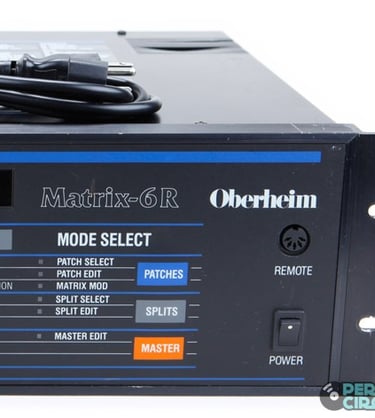
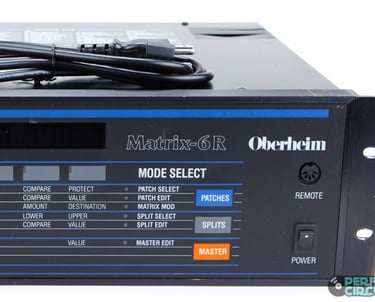
Oberheim Matrix-6R
6-voice analog rackmount synthesizer released in 1986. It uses two DCOs per voice, classic Oberheim analog filters, and a deep modulation matrix that allows extensive sound shaping. Known for its lush pads, evolving textures, and expressive analog character, the Matrix-6R delivers classic Oberheim tone in a compact rack format and remains a favorite for vintage poly-synth sounds with modern-style flexibility